

So, you’re thinking about getting a French Lop rabbit, or maybe you already have one and want to make sure you’re doing things right. Either way, let’s talk about what makes this breed so special, what to expect, and whether they’re the right fit for you.
What Makes French Lops Unique?
French Lops are basically the gentle giants of the rabbit world. They’re big, laid-back, and, for the most part, easygoing. So if you want to do rabbit agility. Yeaaaahh get another breed.
Unlike smaller, high-energy rabbit breeds that are always on high alert, French Lops tend to be more chill and relaxed, kind of like the couch potatoes of the rabbit world.
Key Traits That Make French Lops Stand Out:
✔ Size: They’re one of the largest domesticated rabbit breeds, averaging 11-14 pounds in the U.S.(but can get even bigger). There is no max weight for them according to the ARBA breed standard of perfection so that leads to quite a wide range.
✔ Temperament: Docile and friendly—great for people who want a calm, steady-natured rabbit. – However, they don’t like being carried. So if that is your goal then you need to find a smaller breed. I have referred people to other breeds who have DMed me about getting on the waitlist, but I noticed easy carrying was their goal, and that is not on the french lop feature list.
✔ Purpose: Popular for showing, breeding, and as pets, though they do require more space and care than smaller breeds.
French Lops are not your typical, tiny, high-maintenance house rabbit. They’re strong, heavy, and have their own quirks, but if you want a rabbit that’s easy to handle and fun to be around, they’re a solid choice.
History and Origin of the Breed
Like a lot of large rabbit breeds, French Lops were originally bred for meat back in the 1800s in France. But over time, people started to realize that these big, floppy-eared rabbits weren’t just good for the dinner table—they had amazing temperaments and made great show rabbits.
Fast forward to today, and they’re a popular breed for both rabbit enthusiasts and pet owners. Their massive size, soft fur, and unique shape make them a standout at rabbit shows, and their easygoing nature has made them a favorite among breeders and hobbyists.
French Lop vs. Other Lop Breeds
French Lops sometimes get confused with other lop-eared breeds, but let’s set the record straight:
| Breed | Size | Temperament | Care Needs |
|---|---|---|---|
| French Lop | Needs space, a solid structure | Calm, friendly, but independent | Needs space, a well built structure. |
| Holland Lop | 2-4 lbs | High-energy, more skittish | More delicate, needs socialization |
| Mini Lop | 4-6 lbs | Playful but can be stubborn | Good middle ground between French & Holland |
Main Differences:
- French Lops are way bigger than Mini Lops and Holland Lops.
- Their personalities are typically calmer and more laid-back (but that doesn’t mean they don’t have opinions). – Be careful with giving to many treats. They can become demeaning.
- They require more space and a well-built setup since they can easily destroy flimsy enclosures. – Unfortunately, that is most pre-build hutches these days. I have built all of my own hutches.
If you want a tiny lap rabbit, a Holland Lop might be a better fit. But if you’re after a gentle giant with personality, the French Lop is the way to go.
French Lop Personality and Temperament
Now, let’s talk about what owning a French Lop is actually like.
For the most part, French Lops are friendly, curious, and pretty relaxed, but they’re also strong-willed. They’re the type of rabbit that will happily sit next to you while you work, but if they don’t want to be picked up, they’ll let you know.
Bucks vs. Does – Personality Differences
- Bucks (Males): Usually more mellow, easy to handle, and affectionate.
- Does (Females): Can be hormonal and moody, especially if they aren’t bred or spayed.
Important Note on Does:
I have heard customers say that they have fixed does and they don’t get as grouchy after being fixed. I can’t personally confirm this since I haven’t had a rabbit fixed myself, but I’ve heard it can help. If you don’t plan on breeding, you might consider spaying to avoid potential aggression or mood swings.
Are French Lops Good Pets for Families?
Yes—but there are some important things to think about first.
- They’re BIG: Unlike small rabbits that kids can gently play with, French Lops are heavy and solid making them diffulct to pick up. They are a good pick for kids IF your kids will know that if they want to move the rabbit they need to get help. A strong kid around 10-12 could probably move the rabbit.
- They don’t always love being picked up: French Lops would much rather sit next to you (or lay across your lap) than be held—due to their size, they don’t like feeling like they might be dropped.
- Hormonal does can be aggressive: If left unspayed and unbred, female French Lops can get moody and want to be left alone. So if you want a doe (female) you will need to go into it with the mindset that you will have to get them fixed before they are 7-8 months. (most does start to get fussy around 6-7 months of age)
So, Who Are French Lops Best For?
- Adults or families with older kids who understand how to handle a large rabbit
- People who want a low-energy, friendly companion for THEMSELVES not another rabbit or another species. (More on that later)
- While they don’t need a dedicated room in your house (unless you want to), just be aware that they do take more room than the average rabbit, and it can be hard to find hutches that are big enough without making some modifications or building your own.
If that sounds like you, then a French Lop might be the perfect addition to your home or farm.
Housing & Space Requirements for French Lops
One of the biggest mistakes people make with French Lops is not giving them the right setup from the start. (notice I said right set up. It doesn’t mean a whole room in your house) These aren’t tiny bunnies that can live in a flimsy pet store cage or free-roam around your house without consequences.
Let’s get into what they actually need.
Should French Lops Live Indoors or Outdoors?
Short answer? Outdoors is better.
I know there’s a push to keep rabbits inside like house pets, but here’s the reality: Rabbits chew. And not just casually—they will destroy anything they can get their teeth on. Here are some screenshots of a conversation we had on my rabbitry page and what people said about rabbits living outside.

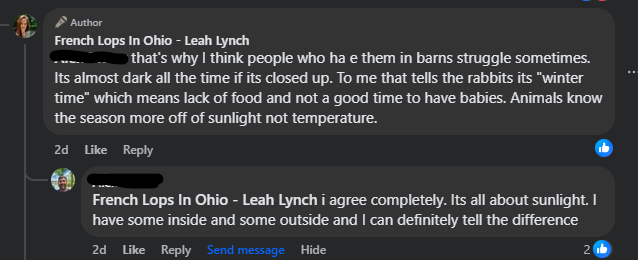


I don’t show this to try and convince you one way or the other. I show you this so you can see it’s not like what some would have you think that outdoors is mean or cruel.
I show you this so you can make the choice for yourself and choose what is best for your family without guilt.
Common Indoor Dangers That Can Be Deadly for a French Lop:
- Baseboards & Furniture: Wood trim and stained furniture can contain toxic chemicals.
- Cords & Wires: One bite, and you’re looking at a fire hazard or a fried rabbit.
- THIS IS THE MAIN PROBLEM I SEE: Fabrics (Rugs, Carpet, Stuffed Items): Rabbits love to chew and swallow fabric, which can lead to intestinal blockages. It doesn’t take much to cause a deadly issue to kill your rabbit.
If you are dead sure on keeping a French Lop indoors, you’ll need serious rabbit-proofing, which often means covering every chewable surface, hiding cords, and monitoring them constantly. Or you can have a space that is set up specifically for them.
Personally, I keep all my rabbits outside—it’s safer for them and much easier to manage.
How Much Space Does a French Lop Need?
Unlike smaller rabbits that can get by in a compact setup, French Lops need room to stretch out but they don’t need as much room as you might think.
Space Requirements (ARBA Guidelines):
- Minimum enclosure size: About a 30″x42″ inches or 5 square feet per rabbit (but if you can do bigger. Great! If not don’t feel guilty about it.)
- Height: At least 24 inches to allow them to sit up on their hind legs like you might see a holland lop do.
Free-Roaming Warning: Letting a French Lop free-roam 24/7 might sound nice, but it often creates behavioral issues. Rabbits that are constantly roaming tend to become territorial, harder to handle, and more destructive. A structured, enclosed space keeps them calmer and more predictable.
Best Hutch and Cage Setup for a French Lop
If you want a clean, healthy, and happy rabbit, the right flooring and cage setup matters.
Wire Flooring is Best
- Keeps waste from building up
- Prevents urine burn and bacterial growth
- Stays dry and sanitary
What NOT to Use:
- Flatboard Flooring: Traps moisture, causing urine buildup and leading to sore hocks.
- Solid Plastic Trays: French Lops are heavy—without proper drainage, they sit in their own waste.
A well-designed wire floor with a resting mat gives the best balance of hygiene and comfort.
Free-Roaming vs. Enclosed Living Spaces: Pros & Cons
There’s a trend of letting rabbits free-roam like a cat or dog, but here’s the reality check:
| Free-Roaming | Enclosed Setup |
|---|---|
| Makes owners feel good | Keeps rabbits mentally stable so they don’t become demanding. |
| Can lead to unpredictable, wild behavior | Encourages a steady temperament |
| Rabbits chew EVERYTHING | Less risk of destruction picking up disease |
If you want a well-behaved, friendly rabbit, keep their environment structured. They don’t need unlimited freedom—they need a safe, comfortable, predictable space.
Ideal Flooring and Bedding Options
Your rabbit’s flooring matters more than you think. The wrong setup can lead to sore hocks, infections, and a nasty mess to clean up.
The Best Flooring & Bedding Options:
- Wire flooring with a resting mat – The easiest to keep clean and dry.
- Straw bedding (in winter) – Great for warmth, but should be changed regularly. It draws damp easily and the rabbits tend to turn it into a toilet.
What NOT to Use (Unless You Want a Vet Bill):
- Pillows & Stuffed Items – Rabbits WILL chew and ingest them. I can not tell you how deadly this is for a french lop.
- Carpet or fleece liners – Once chewed, they can cause fatal blockages.
- Paper absorbent material, if the rabbit has access to it. – Don’t use bedding that swells if moist, like wood pellets or fluffy paper type material. If your rabbit’s cage keeps them above it, then its fine to use them.
💡 Pro Tip: Just because a product says “rabbit safe” just means they can be around it. It doesn’t mean its safe for the rabbit to chew on. That’s what they do. You can’t stop it. So anytime you buy something for them. Ask yourself, “Could this be deadly if my rabbit ingested even a small amount?” If the answer is yes. DON’T BUY IT.
Diet & Nutrition for French Lops
If there’s one thing that will make or break your rabbit’s health, it’s their diet. And unfortunately, there’s a lot of misinformation out there about what rabbits actually need to eat.
Let’s cut through the noise and get straight to what works.
What Do French Lops Eat?
There are a lot of feeding philosophies when it comes to rabbits, but here’s what has worked for me for over 15 years: Pellets only.
Rabbits need 16-18% protein and 22% fiber. Most hay that you can purchase at pet stores or even from local farmers are significantly below these levels. You have to get horse quality hay for this to work.
Think of it like this. If you are eating tons of lettuce before eating your protein. You won’t have room for the nutrition you need. It’s like that with hay and rabbits.
The Two Common Arguments For Hay And My Response To Them.
It keeps their digestion moving: People love to push the idea that rabbits need an unlimited supply of hay, but if you’re feeding a high-quality pellet with the right fiber content (22%), hay isn’t necessary.
Here is why I stopped feeding hay for over a decade, and hand on the Bible, I have never lost a rabbit suddenly to gut issues. 99% of my rabbits die of old age.
I was at a large rabbit show where I over heard many of my fellow French Lop raisers say they almost lost their whole herd to bloat. (Bloat is a gas buildup in the stomach that is caused by an intestinal blockage.)
So I thought, what do I have to lose? It can’t get any worse than almost losing all your rabbits. So I decided to stop feeding hay close to 12 years ago and never looked back.
It keeps their teeth ground down: Rabbits’ teeth continuously grow, and yes, they do need to chew on something to keep them short. But which do you think is harder? Hay or pellets?
Important Note: I’m not fully against hay. But what I notice is that even if you keep your rabbit in the home, the humidity level goes up when the weather is damp. That is going to cause the hay to draw damp and then mold, even a small amount that you may not even see. To me, it’s not worth the risk when there are other alternatives to solve the same reasons people promote hay.
Pellets vs. Free-Feeding Hay
- Pellets Only (My Method): Controlled nutrition, no risk of selective eating
- Pellets + Hay: Works if the hay quality is good and the rabbit doesn’t overeat
- Hay Only: Not enough nutrition for a large breed like a French Lop
French Lops are big rabbits with specific dietary needs. A properly formulated pellet will give them everything they need without the risk of them picking out what they like and ignoring the rest.
Best Pellets for French Lop Rabbits
If you’re feeding pellets, make sure they actually meet your rabbit’s nutritional needs. Not all brands are created equal. AND I think this is why some rabbits doe need fiber added to their pellets because “pet rabbit” feed that is sold in pet stores and sections of a department store RARELY meet these two requirements.
Look for These Ratios:
- Protein: 16-18%
- Fiber: 22% minimum
Anything lower in fiber can lead to digestive issues and keep them from growing strong and healthy —none of which you want to deal with.
Why Fiber is Essential for French Lop Digestion
Rabbits have a delicate digestive system and I think French Lops are a little more touchy than most.
If a rabbit isn’t getting enough fiber, GI stasis can set in, which is one of the most common and dangerous health issues in rabbits.
Does My French Lop Need Hay?
- If you’re feeding a proper pellet with enough fiber, hay isn’t necessary.
- Hay can be used as enrichment, but some rabbits will choose hay over pellets and miss out on critical nutrients.
The key is balance—make sure your rabbit is getting what they need, not just what they want. So if you feel like you want to feed hay. Feed a handful of hay in the morning and a normal amount of pellets in the evening. Rabbits are most active at night, and this will give them their most nutritious food when they are most active.
Safe Vegetables and Fruits for French Lops
Rabbits have a bad habit of fixating on certain foods—if you let them eat too many treats, they’ll start refusing their pellets. It’s like a kid wanting cookies for dinner but on a whole other level. I have seen rabbits go completely on strike and only want one particular thing. Causing them to lose weight and not get the nutrition they need.
How to Feed Treats Without Causing Problems:
Try to keep where the treat is hidden from the rabbit, and if you want to give them something special, do it once a week, maybe. And never at the same time of day.
A rabbit that gets locked in on a certain food will go on strike and refuse anything else, which can lead to major health issues. The best way to avoid this? Be intentional with what you offer and when.
Water Intake and Hydration Needs
For french lops I like these large water bowls best. The bottles that are in the pet section don’t hold enough water, and they are also at risk for leaking and easily thrown or knocked off the hanger.
Bottle vs. Bowl – Which is Better?
- Bottles: Stay cleaner, but some rabbits drink less from them.
- Bowls: More natural for drinking, but they get dirty fast.
If your rabbit isn’t drinking enough, check the water source. A clogged bottle, dirty bowl, or even just stale water can make them refuse to drink.
Grooming for French Lops
French Lops may be low-maintenance compared to long-haired breeds, but that doesn’t mean you can skip out on grooming. If you want to keep them looking good and feeling healthy, you’ll need to stay on top of molting and nails.
Do French Lops Shed a Lot?
Yes. Shedding is just a rabbit thing. I am always getting covered in fur. So if you are carrying your rabbit around. Just expect it.
French Lops shed year-round, but they go through heavier molts a couple of times a year. If you’re not brushing regularly, hair can get felted under the fur and the rabbit can’t get it out. So you have to be the one to help get it out.
How to Handle Shedding:
- Regular brushing keeps loose hair under control.
- During molting season, increase grooming—otherwise, they’ll ingest too much fur while grooming themselves.
- Avoid fur blockages—unlike cats, rabbits can’t cough up hairballs. Ingested fur can lead to digestive issues.
A little maintenance goes a long way.
How to Groom a French Lop Rabbit
Basic Brushing Routine:
This type of comb is my favorite for getting into the undercoat. If you are just doing a basic preventive grooming, a slicker brush will do the job.
French Lops aren’t as high-maintenance as Angoras, but should be groomed once or twice a month. Molting can last about a month so every 3 days or so to help get all the dead fur off.
Preventing Fur Matting and Skin Issues
French Lops don’t typically mat up, unless they’re:
- Transitioning from baby fur to adult coat
- Going through a heavy molt
If you notice mats, don’t ignore them. They can tighten over time and pull on the skin, causing irritation.
How to Prevent Matting:
- Brush more often when they’re transitioning coats.
Check along the rump and what might almost seem like above the feet on their back. They can’t reach that far when grooming themselves. - Make sure their hutch is clean—urine-soaked fur can clump and cause skin infections.
Nail Trimming
Trimming your rabbit’s nails is nothing to be scared of. If they sense your nervousness, they will be more jumpy as well. So do your best to hide it.
All you need to do is trim nails in front of the quick. You can easily see the red vein that goes through the rabbit’s nail if it is light. If not, I tend to clip the nail right at the curve, and it’s usually fine.
- Trim nails every 6-8 weeks to prevent overgrowth. – Don’t forget they have a dute claw on the front and four toes on each foot.
- French Lops have thicker nails, so once they are adults, dog nail clippers work best.
Do French Lops Need Baths? (Why the Answer is No!)
A wet rabbit is a stressed rabbit—and stress can kill them.
Why Bathing is Dangerous:
- Their skin is delicate and can tear easily.
- Wet fur takes too long to dry, increasing the risk of hypothermia.
- Stress can shock their system, leading to serious health issues.
What to Do Instead:
If the rabbit is really messy or having bowel issues and you need to clean it up. What I have done is hold their hindquarters over the sink (NOT IN THE SINCK) and use the sprayer to just rince off the poo or messy area. Then make sure to dry that area off well.
How Long Do French Lops Live?
On average, a French Lop will live 5-7 years. Some can reach 8-10 years, but that is rare. Think of it like the larger-breed dogs. Large breed dogs live about 2/3 to even 1/2 the length of time a small breed does. Their lifespan largely depends on:
- Diet quality – The right nutrition and digestive issues.
- Housing conditions – Keeping them away from household items like fabrics.
- Genetics – Well-bred rabbits tend to be healthier and live longer.
Socialization & Handling
French Lops are known for their calm and friendly nature, but that doesn’t mean they’re going to act like a dog or cat. They have their own way of interacting, and understanding that will make bonding with them much easier.
They are a preyed upon animal so by nature they are making sure you aren’t going to eat them first.
You behaving slowly but confidently is going to be the best thing for them to know they can trust you.
Are French Lops Affectionate?
Yes—but not in the way some people expect.
Rabbits in general are not the type of rabbit that wants to be held all the time, but they do enjoy being near their person for some quick interaction and then some space. They’ll sit next to you, follow you around, or nudge you for attention.
But those videos that show constant snuggles or acting like a dog is not what happens all the time.
What to Expect From a French Lop’s Personality:
Independent, but friendly—They like attention but on their own terms.
More likely to sit beside you than be picked up—Being lifted off the ground makes them feel unsafe.
Curious and interactive—They’ll check things out, but don’t expect them to be overly needy.
If you’re looking for a rabbit that will sit on your lap for hours, a rabbit might not be the best choice. In that case, get a dachshund.
But if you want a calm, easygoing rabbit that enjoys hanging out with you but still wants their own space, they’re a great option.
How to Bond With Your French Lop Rabbit
Bonding with a rabbit takes time and consistency. Getting them young is going to be key to this process happening faster.
French Lops have their own personalities, and while they are generally friendly, they won’t automatically trust you from day one. Which is probably why I like rabbits so much is that they don’t hand over the friend card easily, and I don’t either.
Tips for Bonding:
- Let them come to you—Forcing interaction will only make them more hesitant.
- Sit at their level—Rabbits feel safer when you’re not towering over them.
- Use food as a trust-builder—Hand-feeding small amounts of pellets can help build a bond.
- Respect their space—They need time to adjust to new surroundings and people.
The more time you spend around them without forcing interaction, the more they’ll get comfortable with you.
Do French Lops Get Along With Other Rabbits?
Despite what some people say, rabbits do not need a companion to be happy.
There’s a big push for keeping rabbits in bonded pairs, but the truth is, rabbits are not herd animals. They don’t have a natural need to be in a group, and forcing two rabbits together can more often than not lead to fights and rabbits that are torn up.
I have a rule that all of the litters need to be separated by 10-12 weeks old. There are some bloodlines I have that need to be separated by 8-9 weeks because I have had siblings fight and break skin as early as 9 weeks old.
Things to Consider Before Getting a Second Rabbit:
- Rabbits have a small social circle—They tolerate certain rabbits but don’t necessarily need a friend.
- A bonded pair doesn’t guarantee better behavior—If anything, they may become more independent from you.
- Not all rabbits get along—Just because they’re both rabbits doesn’t mean they’ll accept each other.
If your goal is to have a rabbit that interacts with you, getting a second rabbit will reduce that bond. When rabbits have a companion, they often rely on each other and become less interested in human interaction.
Can French Lops Be Litter-Trained?
This isn’t something I have personal experience with, so I can’t give a firsthand answer. However, many people do litter-train their rabbits, and there are plenty of guides available if you want to try it.
That said, I don’t see it as necessary. If a rabbit is kept in a proper cage with a tray, their waste is already contained, making litter training more of a personal preference than a necessity.
How to Safely Pick Up and Handle a French Lop
French Lops are large, and that means picking them up incorrectly can cause serious injury to both of you. They need to feel secure and with them being as large as they are this can be hard to do. If they kick too hard trying to make you put them down, they can actually break their own spine.
Best Way to Pick Up a French Lop:
- Use the scruff with one hand. – Yes, they have a scruff just like a cat. This isn’t hurting them, you are keeping them safe by restraining them.
- Lift from underneath their back end—Quickly shove their head and shoulders under your arm to give them a “hide away” just like a horse if they don’t see the problem they are less afraid.
- Hold them securely against your body—But don’t squeeze too tight.
It’s ok if your rabbit doesn’t like being picked up, just get them where you need them to be and be done with it. Done make a big deal out of it if its not causing you issues.
Playing With Your Pet Rabbit
French Lops may be bigger than other rabbits, and they don’t have unlimited energy. If anything, they’re one of the more low-energy breeds, often preferring to lounge rather than run around. They will play a little by throwing things around for a few minutes don’t expect them to be an agility rabbit.
How Much Exercise Does a French Lop Need?
French Lops are the couch potatoes of the rabbit world. They’re not like smaller breeds that zoom around constantly. That said, they still need space to move to stay healthy.
How to Make Sure They Get Enough Exercise:
A large enough enclosure so they’re not stuck in a cramped space.
Supervised playtime in a safe, enclosed area. Never free roam. This will cause bad demanding behavior.
Chew toys and tunnels to keep them entertained.
Unlike high-energy breeds that need constant stimulation, a French Lop will be perfectly happy with a few good stretches and a soft place to relax.
Best Toys for French Lops
A French Lop’s idea of fun is usually chewing and exploring. They don’t need complicated toys—just safe things to nibble on and space to move.
Safe Toys:
Unstained wood blocks—Good for chewing and keeping their teeth healthy.
Cardboard tunnels—Great for exploring and hiding.
Willow balls—A simple way to provide entertainment.
Some plastic is ok but is has to be VERY hard. I save old cage cups for them to throw around. The main goal is to keep them from getting something that doesn’t get sharp and cause injury to their mouth, causing abscesses.
Unsafe Toys to Avoid:
❌ Plastic toys— These are super flimsy plastic-like cat ball-type toys.
❌ Anything with dyes or chemicals—Rabbits don’t need bright-colored playthings.
A simple setup with natural chew materials is the safest and most effective way to keep a French Lop entertained.
How to Set Up a Rabbit Playpen
If you want to give your rabbit extra space outside of their hutch, a secure puppy playpen is the best way to do it.
Indoor vs. Outdoor Playpens
| Indoor | Outdoor |
|---|---|
| Must be fully rabbit-proofed | Needs shade and predator protection |
| No exposed wires or chewable furniture | Must be escape-proof |
| Carpeted floors can encourage chewing | Grass areas should be pesticide-free |
French Lops don’t need fancy play areas, but they do need safe, enclosed spaces where they can stretch their legs without getting into trouble.
BE CAREFUL OF PESTICIDES OR HERBICIDES. If your yard is treated with something, this could cause digestion issues in your rabbit.
Training & Behavior
French Lops are easygoing, but they still have natural instincts that aren’t going away—chewing, thumping, and flopping are all part of normal rabbit behavior. While you can’t train them in the same way you’d train a dog, you can learn what their actions mean and how to work with them instead of against them.
How to Stop Destructive Chewing
Spoiler: You can’t.
Rabbits chew. It’s not bad behavior—it’s how they explore, file down their constantly growing teeth, and interact with their surroundings. If you have a rabbit, you have a chewer.
This is one reason why I do not recomend you have a house rabbit.
Why French Lops Chew Everything:
- Their teeth never stop growing—they need to wear them down.
- It’s how they test their environment—they don’t have hands, so they use their mouths.
How to Manage Chewing (Instead of Trying to Stop It):
Provide safe chew materials—unstained wood, willow branches, hay cubes.
Keep them out of trouble—if they can’t access baseboards and wires, they can’t chew them.
Give them mental stimulation—a busy rabbit is less likely to destroy things out of boredom. BUT BE MINDFUL IT DOESN’T ENCOURAGE WILD TYPE BEHAVIOR. I see this so much where they have toys like digging boxes which and then people wonder why they start acting wild and ill-mannered.
If you’re letting a rabbit roam freely and they start chewing furniture, don’t be surprised—it’s instinct. The best way to prevent damage is to keep unsafe objects out of reach and provide plenty of safe alternatives.
Why is My French Lop Thumping?
Thumping is how rabbits communicate danger or frustration. If your French Lop suddenly starts thumping its back feet, it’s trying to tell you something.
Common Reasons Rabbits Thump:
- They heard or saw something unusual. Rabbits have strong survival instincts—if they hear an unexpected noise or see a shadow, they’ll warn others (even if they’re alone).
- They’re annoyed. Maybe you moved them when they didn’t want to be moved, or maybe they’re frustrated that dinner is late.
- They’re scared. If something startled them, they might thump repeatedly as a warning.
What to Do When Your Rabbit Thumps:
Look for the source. Is there a loud noise? A new smell? Something unfamiliar?
Reassure them. Stay calm and let them know everything is okay.
Give them space. If they’re upset, let them settle down on their own.
Most of the time, thumping isn’t a big deal—it’s just their way of letting you know they don’t like something.
What Does It Mean When a French Lop Flops Over?
A rabbit flopping onto its side might look alarming if you’ve never seen it before, but this is actually one of the best signs that your rabbit is happy and comfortable.
Why Rabbits Flop:
- They feel safe and relaxed. A rabbit will never fully flop over unless they trust their surroundings.
- They’re comfortable in their space. If your French Lop is stretched out and flopped over, it means they don’t feel the need to stay alert.
- It’s a sign of complete contentment. This is the rabbit equivalent of kicking back in a recliner after a long day.
Some rabbits flop dramatically, while others ease into it. Either way, flopping is a good thing.
Seasonal Care Considerations for French Lops
French Lops are hardy, but that doesn’t mean they can handle extreme temperatures without help. Whether it’s scorching summer heat or freezing winter nights in the 20s, having the right setup will keep them safe and comfortable year-round.
How to Keep a French Lop Cool in Summer
Heat is one of the biggest dangers for rabbits. Far worse than the cold. Unlike humans, they don’t sweat, and they struggle to regulate their body temperature in extreme heat. Anything over 85°F can put them at risk of heatstroke, so summer care is essential.
How to Keep Your French Lop Cool:
Provide shade. Direct sun can overheat a rabbit fast. Keep hutches in a shaded area, use tarps, or position them under trees. (Trees are THE BEST option if you have it)
Frozen water bottles. Freeze 2-liter bottles of water and place them in the hutch for your rabbit to lean against.
Good airflow. A well-ventilated enclosure prevents heat buildup. Fans can help, but make sure they aren’t blowing directly on the rabbit.
Cool flooring. Ceramic tiles placed in the hutch provide a cool spot to lay on.
Fresh, cool water at all times. Check water bottles and bowls frequently—rabbits drink more when it’s hot.
Signs of Heatstroke in Rabbits:
- Rapid breathing and panting
- Lethargy or unwillingness to move
- Hot ears
- Excessively wet nose or drooling
- Floppy posture
If your rabbit is showing signs of heat stress, get them into a cool, shaded area immediately and use a water bottle to mist the outside of their ears with cool (not ice-cold) water. Not in the ear canal. If they don’t improve quickly, they need vet attention.
Winter Care Tips for French Lops
Unlike summer heat, cold weather is far easier for rabbits to handle. French Lops grow a thick coat, and as long as they have the right setup, they’ll do just fine in winter.
If your rabbit is in a hutch with an open side and it’s cooler than 20 degrees outside for more than 3 days or so you should consider moving them into a barn or garage.
High wind chill and temperatures around 10 degrees will cause frostbite on the ears.
How to Keep Your French Lop Warm in Cold Weather:
- Straw bedding.Pack it thick inside the hutch.
- Wind-blocking techniques. Cover the sides of hutches with tarps, plywood, carpet, or moving blankets to keep out cold drafts.
What Not to Do:
- Don’t bring them inside just because it’s cold. Rabbits adjust to the weather, and sudden temperature changes can be more harmful than steady cold.
- Don’t use space heaters or heat lamps. They pose a fire risk and aren’t necessary.
- Don’t use fleece blankets. If chewed, fabric can cause fatal blockages.
Can French Lops Live Outside in Winter?
Yes, as long as their housing is built for it. It does depend on your local weather, so make sure to keep an eye on it. I’ve had people from cities like Chicago, and they do have to find a warmer housing situation in the dead of winter.
French Lops are not delicate house pets—they do just fine outside as long as they have protection from wind, moisture, and predators.
Essential Features for Outdoor Winter Housing:
3 Solid walls. A draft-free hutch is key to keeping warmth in. – You can’t tarp the open side over in the winter.
Elevated off the ground. Protects against moisture and waste.
Deep bedding. Straw is the best option to insulate their space.
Dry, enclosed area. Rabbits need a space to retreat from wind and snow.
A properly set-up outdoor rabbit can handle winter without issue. In fact, rabbits tolerate cold better than heat, so as long as they stay dry and out of the wind, they’ll be fine.
How to Protect Rabbits from Predators
If your French Lop is housed outdoors, predator protection is non-negotiable. Rabbits are prey animals, and they are vulnerable to raccoons, foxes, hawks, owls, dogs, and even neighborhood cats.
Best Predator-Proofing Methods:
Secure enclosures. Use ½-inch hardware cloth instead of chicken wire—raccoons can rip through chicken wire easily.
Locking latches. Raccoons have dexterous paws and can open simple latches—use carabiner clips or padlocks for extra security.
Elevated hutches. Keeping the hutch 2-3 feet off the ground makes it harder for predators to access.
Where to Get a French Lop Rabbit
Finding the right French Lop isn’t just about picking the first one you see for sale. This is a large breed with specific care needs, so you want to make sure you’re getting a healthy, well-bred rabbit from a reputable source.
How to Find a Reputable Breeder
A good breeder isn’t just someone selling rabbits—they are knowledgeable about the breed, selective in their breeding program with the goal of developing rabbits to the breed standard, not just to get cute colors, and committed to producing healthy, well-tempered French Lops.
Red Flags to Watch For:
Selling too young – Rabbits should be at least 8 weeks old before leaving the rabbitry. They can be on their own as early as 6 weeks because the mother has stopped feeding them by 3-4 weeks old.
Dirty conditions – The rabbits’ housing should be clean above all else.
Trying to sell to you even when you are hesitant that the breed is for you.
A reputable breeder cares about the breed and will be open about health, genetics, and any potential issues. They should also be willing to tell you what they think or how they would care for the rabbit without worrying how you would do it. If something feels off, trust your gut and look elsewhere.
Questions to Ask Before Buying a French Lop
Before committing to a rabbit, make sure you’re getting one that fits your needs and is coming from a responsible breeding program.
Health Considerations:
Has this rabbit been checked for common health issues?
Have the parents had any genetic problems (malocclusion, lower eyelid rolling inward towards the eye, sore hocks, etc.)?
Is the rabbit eating normally and producing solid, round droppings?
Genetics & Breeding:
Does this rabbit have a pedigree? (Even if you’re not showing, a pedigree helps track health and lineage.)
How large were the parents? (The weight should be on the pedigree, but this will give you an idea of how big your rabbit will get.) There is no max breed weight, but as long as the rabbits are 11 pounds for bucks and 11.5 pounds for does, that is the breed minimum.
Temperament & Handling:
- Has this rabbit been handled regularly?
- How does this rabbit react to being picked up?
- Has this rabbit been socialized with people?
A good breeder will be honest about the rabbit’s temperament. Some rabbits are naturally more independent, while others are people-oriented—knowing this ahead of time helps set expectations.
But you won’t be able to see the true temperament until they are about 4 weeks old or up. Even french lops are skitish at a young age because they are snack size. So don’t expect a temperament update until they are a bit more mature.
How to Prepare for Bringing a French Lop Home
Once you’ve found the right rabbit, it’s time to get everything set up before they arrive. A proper transition makes the adjustment period much smoother.
Step 1: Set Up Their Housing
- Outdoor setup? Make sure the hutch is secure, dry, and predator-proof.
- Indoor setup? Rabbit-proof everything before they arrive.
- Flooring: Use wire flooring with a resting mat—French Lops are too heavy for solid-bottom cages.
- Size: The enclosure should be at least 5 square feet, but if you have more space thats fine too.
Step 2: Have the Right Diet Ready
- Feed the same pellets they were eating at the breeder’s—sudden diet changes can cause digestive issues.
- If switching to a new pellet, do it gradually over 5-10 days to avoid stomach problems. The breeder should give you a few days worth for you to feed what they are used to on day one then you can mix the feed you have for them 50/50 until gone.
- Provide fresh, clean water from day one.
Step 3: Give Them Time to Adjust
- Rabbits need time to settle in—expect them to be nervous at first.
- Don’t let loud, noisy kids be all up in their face too much the first few days—let them explore and get comfortable.
- Minimize loud noises and sudden movements to help them feel safe.
Frequently Asked Questions
French Lops are a unique breed with their own care needs. Here are some of the most common questions people have before bringing one home.
Are French Lop rabbits good pets for beginners?
French Lops can be a great choice for the right person, but they aren’t ideal for everyone. Their size, space requirements, and dietary needs mean they require more care than smaller breeds. If you want an easy to hold breed then a holland lop might be more ideal.
They’re best suited for someone who:
- Has enough space for a large enclosure.
- Understands that they are not a lap pet and prefers sitting beside you
- Is committed to proper feeding, grooming, and health maintenance
If you’re brand new to rabbits and want something smaller and easier to handle, a Mini Lop or Holland Lop might be a better fit.
Do French Lops need vaccinations?
No, unless they are exposed to wild rabbits, other animals, or allowed to walk around your yard consistently.
In the United States, vaccinations are not required for rabbits. However, in areas where RHDV (Rabbit Hemorrhagic Disease Virus) is present, some owners choose to vaccinate if their rabbits are kept outdoors.
If your French Lop is staying in a clean, enclosed environment without exposure to wild rabbits, vaccines are not necessary.
How much does a French Lop cost?
The price of a French Lop depends on:
- Breeder quality – Well-bred, pedigreed rabbits cost more.
- Show vs. pet quality – Show-quality rabbits are priced higher.
- Location – Prices vary based on demand in your area.
General price range:
- Pet quality: $100–$150 –
- Show/breeding quality: $150–$300+
Keep in mind that the initial cost is just a small part of owning a rabbit. Proper housing, food, and vet care add up over time.

