

Can you actually make money raising rabbits? The short answer…. yes, you can.
But after nearly 20 years of raising rabbits, I can tell you that the difference between a rabbitry that makes money and one that constantly costs money isn’t necessarily the quality of the rabbits or how many litters you produce.
It’s whether you can consistently find customers who want what you’re raising.
I’ve raised French Lop rabbits for years, and I’ve been through seasons when the economy was uncertain, quality feed was difficult to find, and other breeders were selling off their herds because they couldn’t afford to keep them or they let fear dictate the uncertainty.
Through those seasons, I’ve been able to continue raising the animals I enjoy without constantly worrying about whether I could afford to feed them.
That is why profitability is so important to me.
It doesn’t have to mean replacing your full-time income or building a massive rabbitry. Sometimes, having a hobby that completely pays for itself and puts a little extra money in your pocket is worth more than people realize.
But it doesn’t happen automatically.
If you’re interested in learning how to raise rabbits for profit, here’s how I would approach it if I were starting over today.
1. Choose a Rabbit Breed You Enjoy That Also Has Buyer Demand
Before you purchase your first rabbit, I would encourage you to make a list of ten breeds you’re interested in raising. And I wouldn’t start by looking at which breed sells for the most money. I’d start with which breeds you actually enjoy.
You’re going to have days when it’s freezing outside, you’re not feeling well, or you haven’t sold a rabbit in weeks. Those animals still need to be fed, watered, and cared for.
If you don’t enjoy what you’re raising, those responsibilities can become frustrating pretty quickly. I love my french lops but on those cold below freezing January days, feeding REALLY is not fun and makes me question my sanity.
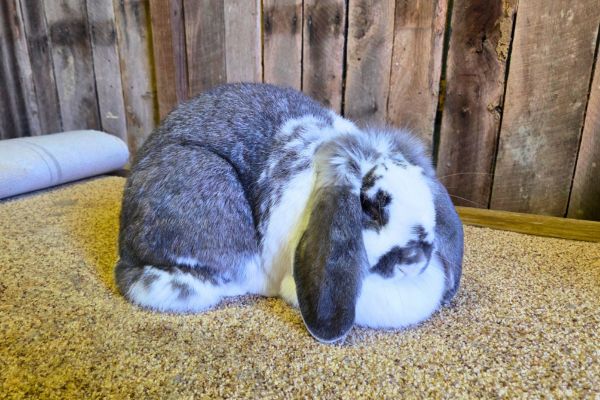
The money is nice, but it should be an added benefit to something you already enjoy doing.
But enjoying a particular breed doesn’t automatically make it a profitable business. You can check out recognized breeds here on the ARBA website.
You also have to figure out of there is demand for that breed.
Research Rabbit Breed Demand Before You Buy
Once you have a list of breeds you’re interested in, start researching how much demand exists for each one.
One of the first places I would look is Facebook.
Here is an example of what shows up when I searched Netherland dwarf and Mini lop rabbits in the search bar on facebook.
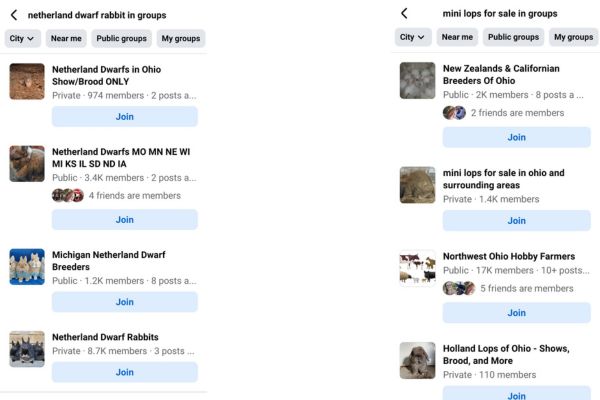
Search for the breed you’re considering and see whether there are active Facebook groups dedicated to it.
Pay attention to:
- How many people are participating in the groups.
- Whether people are regularly asking where to purchase rabbits.
- How often breeders advertise available animals.
- Whether people seem interested in pets, show rabbits, or breeding stock.
- How active the conversations are.
A large Facebook group doesn’t automatically mean there are plenty of buyers, but it can give you an indication of how much interest exists.
Next, I would use a free keyword research tool.
Ubersuggest is one option that offers limited free keyword research daily. Other tools may also provide search-volume estimates.
Try searching phrases such as:
- French Lop (The Breed) + rabbits for sale
- French Lops (The Breed) + near me
- French Lop rabbits in Ohio (The Breed) + Your State
- Rabbit breeders in [your state]
Look at how many people are searching for those phrases each month.
The numbers won’t tell you exactly how many rabbits you can sell. Search-volume estimates aren’t the same as actual buyers, and some people may search without any intention of purchasing.
But they can help you compare breeds and see whether people are actively looking for what you want to raise.
Here’s one way I would think about it.
- If a keyword receives 100 searches per month, what would happen if you eventually sold rabbits to just 1% of those searchers?
- That would be one potential buyer per month.
Would that be enough to support your breeding goals?
It’s not a sales projection, but it’s a useful information to see the demand.
If almost nobody is searching for a particular breed, and you can’t find much activity in breeder communities, you may want to reconsider before investing hundreds of dollars.
You can love an obscure breed, but you also need to be realistic about how difficult it might be to find buyers.
2. Start With a Small Breeding Herd
One of the biggest mistakes I see people make is starting too large before they’ve established a customer base.
It’s exciting to purchase rabbits, especially when you find several beautiful animals from breeders you admire.
But every rabbit you purchase becomes another ongoing expense.
And when you’re new, people don’t know who you are yet.
You haven’t built a reputation. You don’t have customers referring their friends to you. You may not even know what buyers in your area are looking for.
That takes time.
Should You Start With a Pair or Trio of Rabbits?
If you’re just testing whether raising rabbits is something you want to continue doing, I would start with a breeding pair.
That’s one buck and one doe.
If you’re fairly confident that you want to build a rabbitry, I would consider starting with a trio.
That’s one buck and two does.
A trio gives you the opportunity to produce offspring from two different does without maintaining a large herd.
You can breed one doe first, see how the litter goes, and learn how to market and sell those rabbits before breeding the second doe.
I would give yourself an entire year to test the business before expanding significantly.
That gives you time to experience breeding, raising litters, finding buyers, and managing the expenses.
Don’t purchase ten rabbits simply because you eventually want a ten-rabbit breeding program.
Let your customer demand grow first. You can learn exactly how to do this in my ebook the Profitable Rabbitry Playbook 2.0
Buy the Best Quality Breeding Rabbits You Can Reasonably Afford
Rabbit prices vary A LOT depending on the breed, quality, location, and breeder’s reputation.
I’ve seen Netherland Dwarfs sell for thousands of dollars at auction.
But those prices were attached to rabbits from breeders who had spent decades developing their animals, competing successfully, and building a reputation.
You can’t look at those prices and assume you’ll be able to sell your first litter for the same amount.
You need to understand why buyers are willing to pay those prices.
- Are you planning to sell rabbits to 4-H families who may have a budget of around $100?
- Are you trying to raise competitive show rabbits for experienced exhibitors?
- Or are you developing something more specialized that buyers may be willing to pay several hundred dollars for?
Those are very different markets.
My personal strategy has always been to purchase the best quality animals I can reasonably afford.
I would rather start with a higher-quality rabbit and have the option of selling its offspring for less than purchase poor-quality breeding stock and struggle to produce anything better.
Quality gives you options.
That doesn’t mean every inexpensive rabbit is unhealthy or unsuitable for breeding. But extremely cheap animals may have conformation weaknesses, poor condition, or other problems that make them less useful for your goals.
Evaluate the animal itself, not just its price.
And understand that you may need to sell your first few litters for less than an established breeder until you’ve built your own reputation.
3. Calculate Your Rabbitry Expenses Before Expecting a Profit
You need to know your numbers for your rabbitry to become profitable!
But I also want to make something clear: keeping expenses low won’t automatically make your rabbitry profitable.
You still have to sell the rabbits you produce.
Rabbits aren’t a product you can leave sitting on a shelf for a year while you wait for someone to purchase them.
They grow, they eat, and they require more space. And their is a window when it comes to desired age to purchase depending on the market.
That’s why I believe marketing is one of the biggest factors in rabbitry profitability.
Still, knowing your expenses gives you a financial foundation of what is required to cover cost. On top of that when you know what your expenses are and what each rabbit costs you to have. You can ask yourself, is it worth adding another $10 a month to feed this rabbit.
Start With Your Feed Costs
Feed is my biggest recurring expense.
My established rabbitry currently has around 13 adult rabbits, and I purchase 50-pound bags of feed for approximately $27 each.
On average, I budget roughly one bag of feed per adult rabbit every ten weeks.
That works out to approximately $140 per adult rabbit annually.
For 13 rabbits, that’s around $1,825 per year in adult feed.
I personally round that number up to about $150 per adult rabbit each year when doing quick calculations.
Your numbers will depend on your breed, feed prices, the amount each animal consumes, and whether you’re feeding growing or nursing animals.
A small breed won’t necessarily eat as much as my French Lops.
Don’t Forget the Feed Your Litters Consume
You also need to calculate how much it costs to feed the rabbits you’re producing.
Let’s use an example from my rabbitry.
Suppose I produce ten litters in a year, averaging four kits per litter.
That’s 40 kits.
For planning purposes, let’s estimate that each growing kit consumes an average of six ounces of pellets daily from three weeks old until it’s sold.
At $27 per 50-pound bag, feed costs approximately 54 cents per pound.
If those 40 kits are eating pellets for seven weeks, the estimated feed cost is around $397.
But I am also a big fan of overestimating when it comes to budgeting livestock. I would rather come in under budget than over. So I give myself another two-week buffer.
That brings the estimated kit feed expense to approximately $510 if I’m budgeting through 12 weeks of age.
These are simplified planning estimates. Actual consumption varies with age, breed, litter size, and nursing-doe needs.
My Estimated Annual Rabbitry Expenses
Using those assumptions, my basic annual budget looks something like this:
- Feed for 13 adult rabbits: approximately $1,825.
- Feed for 40 growing kits through 12 weeks: approximately $510.
- Additional annual expense allowance: $500.
- Estimated total: approximately $2,835.
That doesn’t include the original cost of purchasing any rabbits or setting up the rabbitry. It also isn’t a guarantee that every unexpected expense will fit within that allowance.
These are my working numbers for an established operation, not what every beginner should expect.
Your own budget may need to include bedding, utilities, repairs, veterinary expenses if you choose to use one, transportation, show fees, losses, and replacement breeding stock.
And if you want to calculate true business profit, you should also consider the value of your time.
The important thing is to calculate your own costs before deciding what you need to charge.
Know How Many Rabbits You Need to Sell To Have A Profitable Rabbitry
Let’s say you maintain ten adult rabbits. At my rough estimate of $150 in annual feed per adult, that’s $1,500 per year.
If you sell ten rabbits for $150 each, you’ve brought in $1,500. You’ve covered the estimated adult feed bill. You haven’t necessarily made a profit yet.
You still have the cost of raising the kits, maintaining equipment, and paying other expenses.
But you’ve reached an important milestone.
You know how many sales are required to cover one of your largest expenses.
That information also helps when someone asks whether you’ll lower your price. You can make that decision based on actual numbers instead of guessing.
4. Start Marketing Before You Have Rabbits to Sell
If there’s one thing I would tell every new rabbit breeder, it’s this: You can’t sell a secret.
People have to know you exist before they can purchase rabbits from you. And if you wait until your rabbits are ready to leave before looking for customers, you’re making the process unnecessarily difficult.
Why I Continue Posting Even When Nothing Is Available
I consistently post on my rabbitry’s Facebook page at least three times per week throughout the year.
That includes seasons when I don’t have a single rabbit available for sale.
- I share pictures, updates, stories, things I’ve learned, and occasionally the struggles we’re having.
- Sometimes it’s something as simple as one of the rabbits being particularly friendly lately.
- Other times, I’m discussing a breeding decision or showing people the qualities I like about a particular animal.
The result?
I estimate that I turn away around 80% of the inquiries I receive because I don’t have what those people are looking for available at the time.
Would I love to have a rabbit for every person who asks? Of course.
But I’d much rather have more interested buyers than rabbits available than be struggling to find someone to purchase animals that are getting older and costing me money.
Many of my rabbits have buyers before they’re old enough to leave the farm.
That didn’t happen overnight. It came from consistently showing up.
Treat Upcoming Litters Like Product Launches
One strategy I recommend is to begin talking about your breeding plans before you even breed the rabbits.
Think about it from your customer’s perspective. Purchasing a rabbit isn’t an impulse decision.
They’re spending money on the animal, purchasing supplies, preparing housing, and committing to ongoing care.
They need time to plan.
If you know you’re planning a breeding, start sharing that process.
You could post about:
- Which buck and doe you’re planning to pair.
- Why you chose those particular rabbits.
- What qualities or colors you’re hoping to produce.
- When the breeding takes place.
- Whether you believe the doe is pregnant.
- When you’re preparing the nest box.
- When the litter arrives.
- How the kits are developing.
- When you expect to begin accepting reservations.
You don’t need to promise a litter before it’s born. Breeding doesn’t always go according to plan, and sometimes a doe doesn’t conceive. But even sharing those disappointments can build trust.
People get to see that you’re a real breeder managing real animals, not simply appearing online whenever you want to sell something.
I would begin marketing at least 12 weeks before your first rabbits are expected to be available.
And if you haven’t even purchased your breeding stock yet, you can still start a Facebook page. Share the process of finding your rabbits, preparing your setup, and explaining your goals. Bring people along for the journey.
Use Customer Pictures to Build Trust
Another thing I’ve found helpful is sharing pictures from people who have purchased rabbits from me.
Sometimes buyers send me updates showing how their rabbits are doing. I’ll ask permission to share those pictures on our page.
Occasionally, I’ll also make a post asking previous customers to share pictures of rabbits they’ve purchased from Oak Hill Farm.
It’s a simple way to show prospective buyers that other people have purchased from us and are happy to share their experiences.
That kind of trust is difficult to manufacture. You have to earn it.
Start With One Free Marketing Platform
I wouldn’t recommend that a beginner immediately build a website, launch a YouTube channel, and start posting on five different social platforms.
Choose one.
For most rabbit breeders, I would start with a Facebook page. Not a group. A business page.
Use it to document what you’re doing and build relationships with potential buyers.
Give yourself around 15 minutes per post, and aim for three posts per week.
If you later decide you’re committed to raising rabbits long-term, you can consider building a website or a backup platform incase one starts to not work anymore.
My website is an authority-building asset, and it gives people another way to find my rabbitry.
But it also requires money and maintenance.
I wouldn’t make that a priority before you’ve established that you actually enjoy running the rabbitry business.
5. Understand Who You’re Selling Rabbits To
One of the biggest decisions you’ll make is whether you’re willing to sell rabbits as pets, show animals, or breeding stock.
These markets aren’t the same size, and buyers have different expectations. In my experience, the pet market gives you access to a much larger pool of potential customers.
Show rabbit buyers are a much smaller, more specialized group.
They may be looking for very specific qualities, genetics, or bloodlines.
Pet buyers are often more concerned about temperament, appearance, and finding an animal that fits their family.
That doesn’t mean every rabbit is suitable for every home. You still need to be honest about the breed’s needs and whether it’s a good fit for the buyer.
But if you’re willing to sell appropriate rabbits into the pet market, you may have more opportunities to place animals.
For my rabbitry, that wider customer base is an important part of making consistent sales. They can be a little more emotionally challenging and I know several breeders who are not willing to do that. So you have to see if that is right for you or not.
I generally want interested buyers selecting and reserving rabbits before eight weeks old, with the goal of having them sold by around ten weeks.
That doesn’t mean sending them home before they’re ready. It means arranging the sale ahead of time so they can leave at an appropriate age. If I don’t there are sibling squabbles and sometimes they can even damage each other ending the show career.
The longer you keep growing rabbits without a plan for selling them, the more they cost to maintain.
6. Don’t Keep More Breeding Rabbits Than You Need
Another mistake I see is keeping too many bucks.
You don’t need half your herd to be bucks and the other half does. For my breeding goals, I generally don’t need more than three bucks during a breeding year.
One strategy I’ve used is keeping three unrelated bucks, producing offspring from each, and then rotating those bucks out as I bring in new genetics.
That allows me to continue improving my herd without maintaining more breeding males than I need.
Of course, the number of bucks you need depends on your breed, herd size, and breeding program.
But every additional animal should have a purpose and serve the goals you are trying to reach with your rabbitry.
Set Goals for Your Breeding Program
Each year, I decide what I’m trying to improve in my French Lops.
Maybe I want better width, more bone, improved size, or fuller hindquarters.
I also have qualities I’m not willing to sacrifice.
For example, long shoulders are something I work hard to avoid in my breeding program because they can be difficult to improve once they become established. And it’s one of the first things to get your rabbits placed lower on the show table.
When I’m evaluating a litter, I’m not simply choosing the cutest rabbit.
I’m looking for youngsters that have the qualities I want without bringing in weaknesses I’m trying to eliminate.
I’ll keep promising animals longer to see how they develop. Then I’ll decide whether they actually deserve a place in the breeding program.
Sometimes You Have to Sell a Rabbit at a Loss
I recently sold a buck that I’d purchased for $200…. I eventually let him go for $50.
Looking only at his purchase and resale prices, that was a $150 loss.
But that’s not the whole story. He produced offspring for me while I was working toward finding better breeding stock. That also afforded me to save up the cash for better animals. My french lops on average cost $200-$300 to buy.
He had good size, but he also had weaknesses I didn’t want to continue breeding into my herd, including producing more wooled offspring than I wanted.
So I used him temporarily, then moved him out when I had a better direction for my program.
Sometimes a breeding season becomes more about maintaining your operation than making dramatic improvements. That’s okay, businesses have good seasons and maintainting seasons.
If you’re building something for the long term, not every individual decision has to look profitable on paper.
You need to understand what that animal contributed to the overall business.
7. Don’t Assume You Have to Show Rabbits Constantly
I raise show-quality French Lops, but I don’t spend every weekend attending rabbit shows.
I typically attend around three shows per year, usually smaller events within a reasonable distance.
Showing has expenses beyond the entry fees. Even if entries only cost around $4–$7 per rabbit, you still have travel, time, preparation, and the physical demands of attending.
And attending more shows doesn’t automatically make your rabbits top show animals or guarantee higher selling prices.
In the show world, the animal’s conformation on the judging table and how it stacks up to the other animals that showed up that day. It’s passed winnings have no affect on anything.
A rabbit doesn’t become an excellent animal simply because its parents won awards or it has an impressive pedigree.
I have two sets of full siblings that look very different from each other.
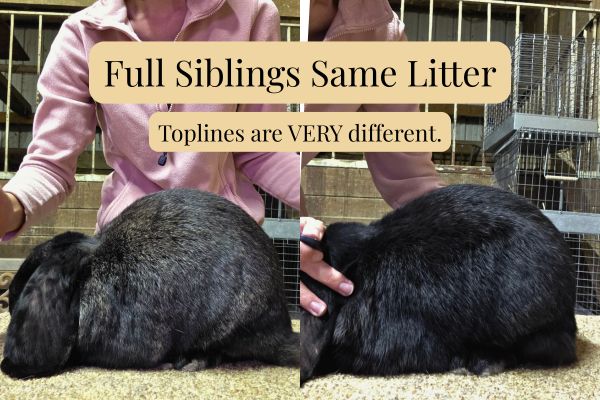
A impressive pedigree and ancestorial winnings may provide useful information, but they don’t replace evaluating the rabbit in front of you.
There are breeders who invest heavily in competing at the highest levels, and some build reputations that allow them to command extraordinary prices. Whether they know it or not, that is a different business strategy.
You’re targeting a much smaller group of buyers willing to spend those amounts. But you also take on a lot of expenses as well.
If your goal is to raise good-quality animals for a broader market, you may not need to pursue that level of competition.
Decide which market you want to serve before committing the time and money.
8. Learn Basic Rabbit Health and Management Skills
Health problems can quickly affect profitability.
And one of the things I’ve learned over the years is the value of understanding my own animals. Prevent health issues rather than having to treat them. And I prefer to be hands-on with their daily care and learn how to recognize when something isn’t right early.
I also use herbs in some aspects of my rabbitry management and prefer to handle appropriate routine care myself rather than automatically paying for every possible test or vet appointment.
That’s my personal approach, and it has influenced how I manage expenses.
You have to deside what is worth it to you and where your boundaries lay with veterinary costs. Treat what you can hand hope for the best. Or be willing to spend hundreds or thoughsends on vets and lose profitability or go back to having something that drains your family budget.
Its up to you how you handle it. Know your reasons and stick to your own values.
9. Plan Your Breeding Schedule Around Buyer Demand
Just because you can produce a litter doesn’t mean it’s the right time to produce one. You need to consider whether buyers will be looking for rabbits when those offspring are ready to leave.
Over the years, I’ve noticed a fairly consistent seasonal pattern in my own rabbitry.
When Rabbit Buyers Are Most Active
For my French Lops, buyer interest tends to increase significantly right after New Year’s.
The messages start coming in from people planning their new animals for the year. That demand usually stays relatively strong through April or May.
Then summer arrives, and inquiries slow considerably. Interest tends to pick up again around September and October, particularly among people looking for breeding or show animals.
It isn’t usually as strong as the beginning of the year, and things slow again around the holidays.
Then January arrives, and the cycle starts over.
I’ve watched this happen for years. That’s why I’m testing out a new strategy and planning to have young rabbits ready to leave around mid-January.
I want to have animals available when people are actively shopping and many other breeders may not have anything ready.
Your market may be different. That’s why I recommend paying attention to your own messages and inquiries.
- When are people asking about available rabbits?
- When do inquiries slow down?
- Are buyers looking for pets, show animals, or breeding stock?
Use that information to plan your breeding schedule instead of producing litters without considering demand.
10. Keep Your First-Year Expenses as Low as Reasonably Possible
When you’re starting out, you don’t need beautiful equipment. You need equipment that does the job.
Some of my first rabbit hutches were school-bus yellow and bright red. They weren’t pretty.
Honestly, I wish I still had pictures of some of those early setups because they were something else.
But they were solid, functional, and appropriate for the rabbits I was raising. That’s what mattered.
Look for used equipment on Facebook Marketplace, Craigslist, or through other breeders.
If you’re handy, you may be able to repair equipment and save money. Just make sure anything you purchase is structurally sound, safe, easy to maintain, and appropriate for the size of your breed.
You can also save money by looking outside the rabbit-specific section of a store.
For example, I use some rubber bowls marketed for dogs because they work well for my rabbits and cost around $5 instead of $20 for certain rabbit-specific watering products.
Sometimes being resourceful is more valuable than buying whatever product everyone else recommends.
Set Realistic Financial Goals for Your First Year
If I were starting with a breeding trio today, my first goal wouldn’t be to make thousands of dollars.
It would be to have the rabbits pay for their ongoing expenses. That’s it.
If you can sell enough offspring to cover feed and other recurring costs during your first year, you’ve reached a great milestone.
Then, during your second year, you can work toward recovering what you spent on your cages, breeding stock, and other startup equipment.
After that, you can begin focusing more heavily on actual profit.
Of course, you may reach those milestones faster or slower depending on your breed, expenses, litter production, and marketing efforts.
But I think this is a much healthier way to approach the business than expecting immediate income.
Once your equipment has been paid for, the financial picture can change significantly. I’ve been raising rabbits long enough that I’m not paying for equipment. Just ongoing expenses and occasionally new livestock.
That makes profitability easier than it was when I was starting from scratch.
11. Be Realistic About the Time Commitment
Rabbits may not require the same daily workload as larger livestock, but they still need care every single day.
For my herd of approximately 10–15 rabbits, feeding and watering generally takes around 30 minutes during warmer weather.
I carry a bucket of feed around the rabbitry, fill the feeders, and then make another round with water.
Sometimes I stop to give a rabbit a little attention or check something that needs it.
Winter is different.
When water freezes and I’m carrying buckets instead of using the hose, that same routine can take 45 minutes to an hour.
And that doesn’t include every other task involved in running the rabbitry.
Other Rabbitry Tasks to Plan For
Some of the time commitments I would budget for include:
- Daily feeding and watering: Approximately 2–3 minutes per adult rabbit in my setup, with additional time during winter. – these are my favorite cage cups for rabbits.
- Nail trimming: Around 5–8 minutes per rabbit every 6–8 weeks, depending on the animal. – These nail clippers are awesome.
- Cage cleaning: If you’re using trays, allow roughly five minutes per cage weekly as a starting estimate.
- Facebook marketing: Approximately 15 minutes per post, or 45 minutes per week for three posts.
You’ll also need time for breeding, nest boxes, litter checks, health monitoring, evaluating youngsters, communicating with buyers, and arranging pickups. – These are some of the best rabbit travel carriers for health and keeping them clean.
My housing system allows waste to fall beneath the cages, so I don’t have the same daily tray-cleaning responsibilities that someone with a different setup might have. Waste still needs to be managed appropriately for sanitation.
Your own time commitment will depend heavily on your housing system and how many animals you keep.
This is another reason I recommend starting small.
You can always expand after you understand what the work actually involves.
12. Build a Reputation That Makes Selling Easier
If there’s one business lesson that has served me well through nearly two decades of raising rabbits, it’s that your reputation matters.
And it isn’t something you build overnight. You build it by showing up, being honest, and doing what you say you’re going to do.
I’ve told people that French Lops probably weren’t the right breed for them.
I’ve also been open about management practices I believe in, even when other people disagree.
I believe wire flooring, when properly designed and maintained for the rabbit, can be a healthy housing option. Not everyone agrees with that, and that’s okay.
You need to understand why you’re doing something and be willing to explain your reasoning.
But there’s a difference between standing by your beliefs and being condescending toward someone who sees things differently.
Be kind. Be honest. Pay attention to how you speak to people.
And when you make a mistake, own it. Trying to cover up a mistake can damage trust far more than admitting what happened and making it right.
Why Consistency Matters More Than You Think
I’ve continued marketing my rabbitry even during seasons when sales were slow.
And that consistency has paid off.
If you stop posting for six months, people may forget you’re there. You’ve stopped adding to the trust you’ve spent time building.
Then, when you suddenly have rabbits available, you’re trying to rebuild attention at the exact moment you need customers.
I’d rather continue showing up when I have nothing to sell.
Sometimes that means answering questions from people who may never purchase a rabbit from me.
Sometimes it means sharing a lesson I’ve learned or helping someone understand whether the breed is right for them.
That still has value. People remember who helped them.
And when they’re ready to buy, or someone they know is looking for a breeder, they may remember you.
You want to build such a wide network of people who know about your rabbitry that you have more interest than animals available.
That takes time. But it makes selling so much easier.
13. Remember Why You Wanted to Raise Rabbits in the First Place
For me, the greatest benefit of having a profitable rabbitry isn’t necessarily the money left over at the end of the year.
It’s knowing that I can afford to continue raising animals I enjoy. I’ve experienced uncertain economic times, including 2008 and the shutdowns in 2020.
I watched other breeders struggle with whether they could afford to continue feeding their animals.
Some sold large portions of their herds because they weren’t sure what the future would hold.
But I didn’t have to make that decision because my rabbitry was financially sustainable.
We had challenges, including finding the quality feed we needed, but I wasn’t sitting there wondering whether I needed to sell off the animals I loved.
And that’s a tremendous blessing.
When life is already stressful, having to give up something that brings you joy can make it even harder.
Building a rabbitry that pays for itself has allowed me to continue doing something I enjoy without making it an ongoing financial burden on our family.
That’s why I believe learning the business side of raising rabbits matters so much.
You don’t have to turn your rabbitry into a full-time job. You don’t have to own dozens of animals.
And you certainly don’t have to spend every weekend traveling to rabbit shows.
You can build something small, manageable, and profitable enough to support itself.
But you need to treat it like a business if you want it to produce business results.
How to Get Started Raising Rabbits for Profit
If I were starting over today, here’s the order I would follow:
- Make a list of rabbit breeds I genuinely enjoy.
- Research which breeds have enough buyer demand in my market.
- Decide whether I want to sell pets, show rabbits, or breeding stock.
- Purchase a quality breeding pair or trio.
- Find affordable, safe, functional housing.
- Calculate my annual feed and operating expenses.
- Create a Facebook page and begin sharing my journey.
- Build buyer interest before producing my first litter.
- Start with one litter and learn from the experience.
- Reinvest carefully and expand only when demand supports it.
You don’t need to have everything figured out before you begin.
But you do need a plan.
And that plan should involve more than purchasing rabbits and hoping someone wants the babies.
Want Help Planning a Profitable Rabbitry?
If you’re serious about turning your rabbitry into something that helps pay for itself, I created the Profitable Rabbitry Playbook to help you think through the business side of raising rabbits.
It’s designed for breeders who want to make more intentional decisions about their expenses, breeding goals, and sales instead of simply hoping they’ll make enough money to cover the feed bill.
You can learn more about the Profitable Rabbitry Playbook here.
Because after all these years, one thing I’ve learned is that you don’t have to make raising rabbits complicated to make it worthwhile.
You just have to be intentional about what you’re raising, who you’re raising it for, and how you’re going to find those buyers.
And above all, remember:
You can’t sell a secret.
Keep showing up, keep improving your animals, and give your reputation time to grow.
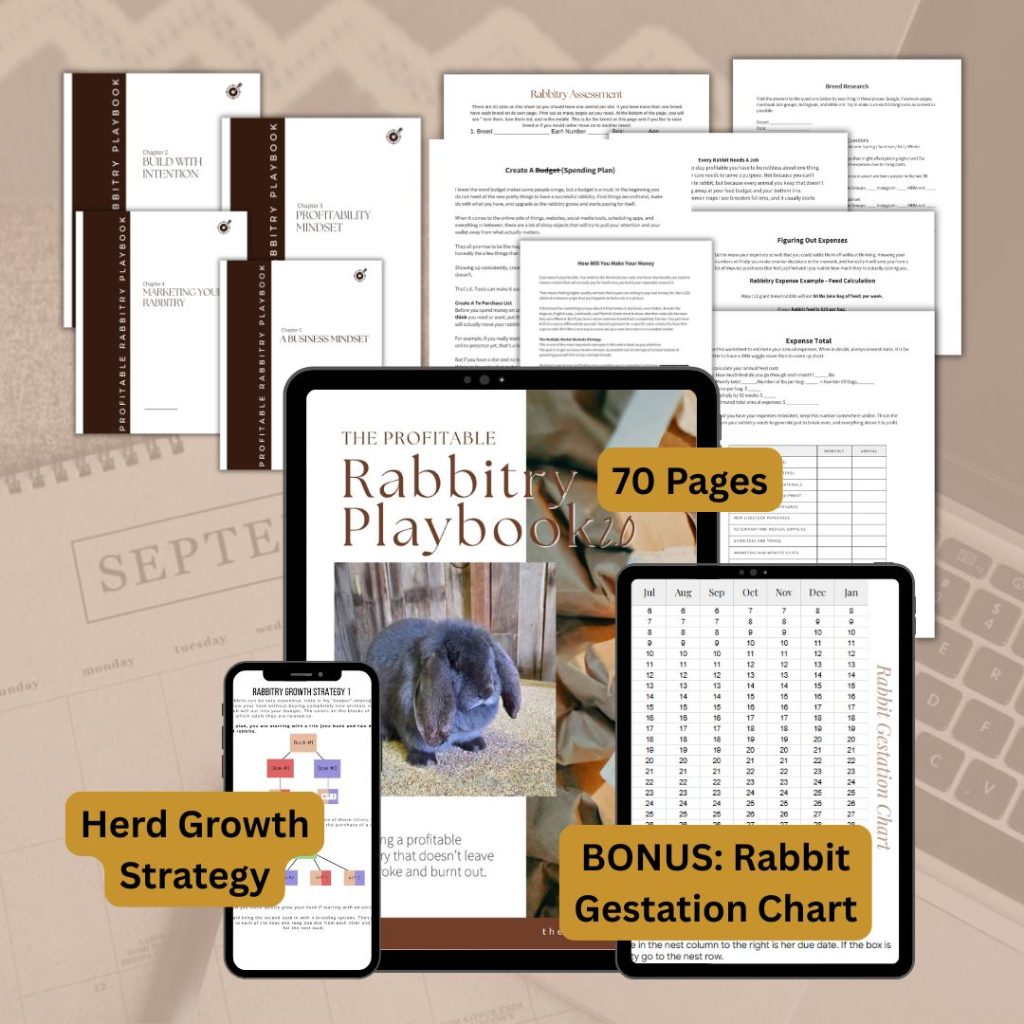
The Profitable Rabbitry Playbook 2.0
The only business book for rabbitry owners of any size to teach you how to turn your money-sucking hobby into a business that pays for itself.
Learn the exact systems that I use to earn multiple four figures a year!
ONLY $37!
One Comment