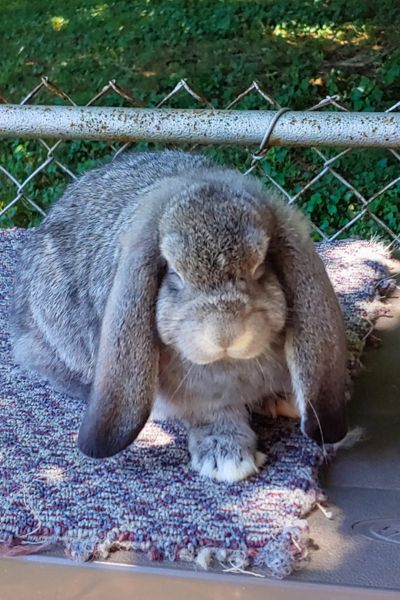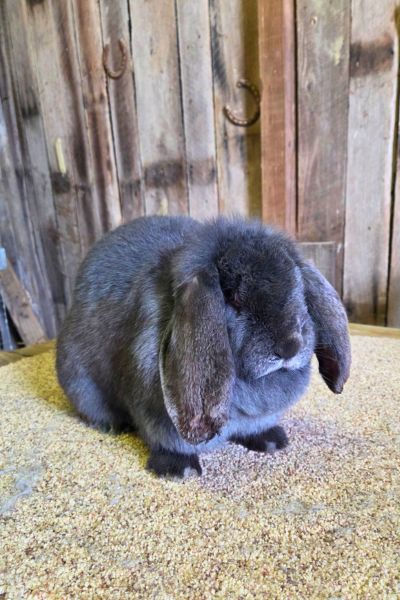
If you have been raising rabbits for any length of time, you have probably come across a lump on one of your animals and immediately, a red flag went up. My goal is to help people do what they can for themselves so I created this French Lop rabbit abscess symptoms guide so you can know for sure.
French Lops are a breed I have raised for 16+ years and like any large breed rabbit they are not immune to abscesse and because of their bold face the males are really prone to getting them. The good news is that it’s not as scary as it might seem and is definitely treatable.
Here is what you need to know.
Disclaimer: I am not a veterinarian. Everything shared in this post is based on my own personal experience raising French Lops and is intended for informational purposes only. Always use your own judgment and consult a licensed veterinarian when needed for the health and care of your animals
What Is An Abscess?
An abscess is a pocket of infection under the skin. In rabbits it is usually caused by bacteria getting into a very small wound, a scratch or a bite that has grown into a hard lump. Unlike in dogs or cats, rabbit abscesses do not drain easily on their own. The pus inside is thick and is toothpaste-like, which is part of what makes them tricky to deal with.
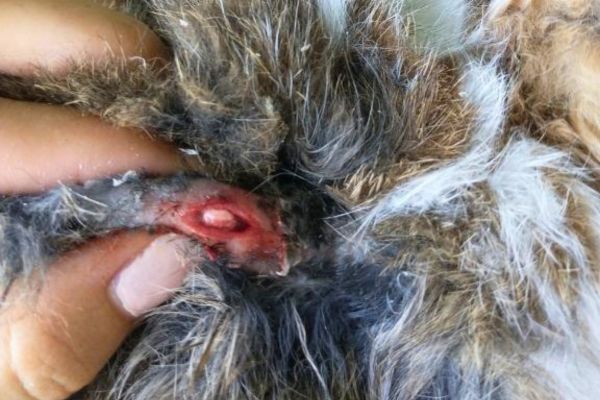
Where Do They Commonly Appear On French Lops?
French Lops are big animals with big heads and heavy ears, and those features actually make certain spots more prone to issues. Common locations to check include:
- Along the jawline and under the chin, often related to rubbing their chin on things to mark it with their scent glands.
- Behind or around the ears, especially if there has been any scratching or irritation
- On the legs where cage wire or nail from the cage may have come exposed and poked the rabbit.
- If you have rabbits together (never recommended) the other rabbit may have caused a wound
- Around the face in general, since dental issues are not uncommon in lop breeds due to their skull shape
What Does It Look And Feel Like?
In the early stages an abscess may just feel like a firm lump under the skin. It probably will not feel soft or squishy the way you might expect. Rabbit abscesses tend to feel hard, almost like a marble or a small ball under the skin. The area around it probably will not be warm to the touch depending on how developed it is.
As it progresses the lump may grow larger, the skin over it may start to look stretched or turn white as the body naturally starts to try and push the infection out.
How To Tell If Something Is Wrong With Your Rabbit In The First Place
The first thing I watch is their head. A rabbit that is not feeling well will usually hide in the corner of their cage and not respond when you come to them, even at feeding time. Sometimes they are just having an off day and that is fine. But I take a mental note of it. If they are doing the same thing the next day I start paying closer attention.
The next thing I check is how much feed they have eaten. If they have not eaten at least half of their normal amount I know something is actually wrong. That is when I get them out and look them over.
For French Lops specifically, one of the first visible signs I often see before I ever find a lump is weepy eyes.
If you have a French Lop with watery or goopy eyes and no obvious environmental reason for it, keep looking. And if the abscess is located near the mouth or deep along the jawline you may also notice drooling or slobbering, which is a sign the infection is affecting their ability to eat or swallow comfortably.
How To Check For An Abscess
Once I know something is off I feel around the jawline first. This is the most common spot, especially in bucks. Rabbits have scent glands under their chin that they use to mark their territory, and that area seems to be more prone to abscess development. Does can get them too but in my experience it is far less common.
If I find a lump I immediately try to work it toward the surface of the skin by pressing gently around it. This tells me a lot about what I am dealing with. If you can push the lump up close to the surface where there is almost nothing between it and the skin, that is a good sign. It means the abscess is accessible and will likely be easier to treat and drain.
If it feels deep and you cannot get it to move toward the surface at all, that is a more complicated situation. I had one young buck get one attached to the jaw and I was not able to drain that one on my own. You will never be able to get a rabbits jaw open without them being under anesthesia. Which is a huge risk in it self.
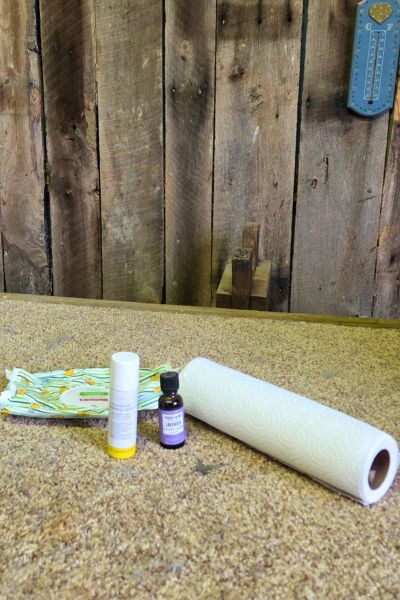
If I do not have enough time to treat it properly right then I will actually wait until the following day when I have at least an hour to deal with it correctly. Rushing through cleaning and draining an abscess does more harm than good. You need enough time to get the pus and debris fully cleaned out, treat the wound, and pack it with something like lavender essential oil to help fight the infection from the inside. Taking the time to do it right the first time is what determines how well and how quickly it heals.
Why Catching It Early Matters
Abscesses in rabbits rarely get better on their own. On rare occasions it will rupture on its own and you can clean it out but by then the abscess has been around for quite a while.
Watching for it to rupture on its own is dangerous because they tend to grow and the infection can spread into the blood stream. Catching one when it is still small gives you more options and a better outcome whether you choose to involve a vet or manage it yourself.
A large or deeply rooted abscess, especially one involving a tooth root, becomes significantly more complicated and expensive to deal with the longer it goes untreated.
If you notice a lump on your French Lop do not wait and see for weeks. Get a closer look right away and start making a plan.
What To Do Next
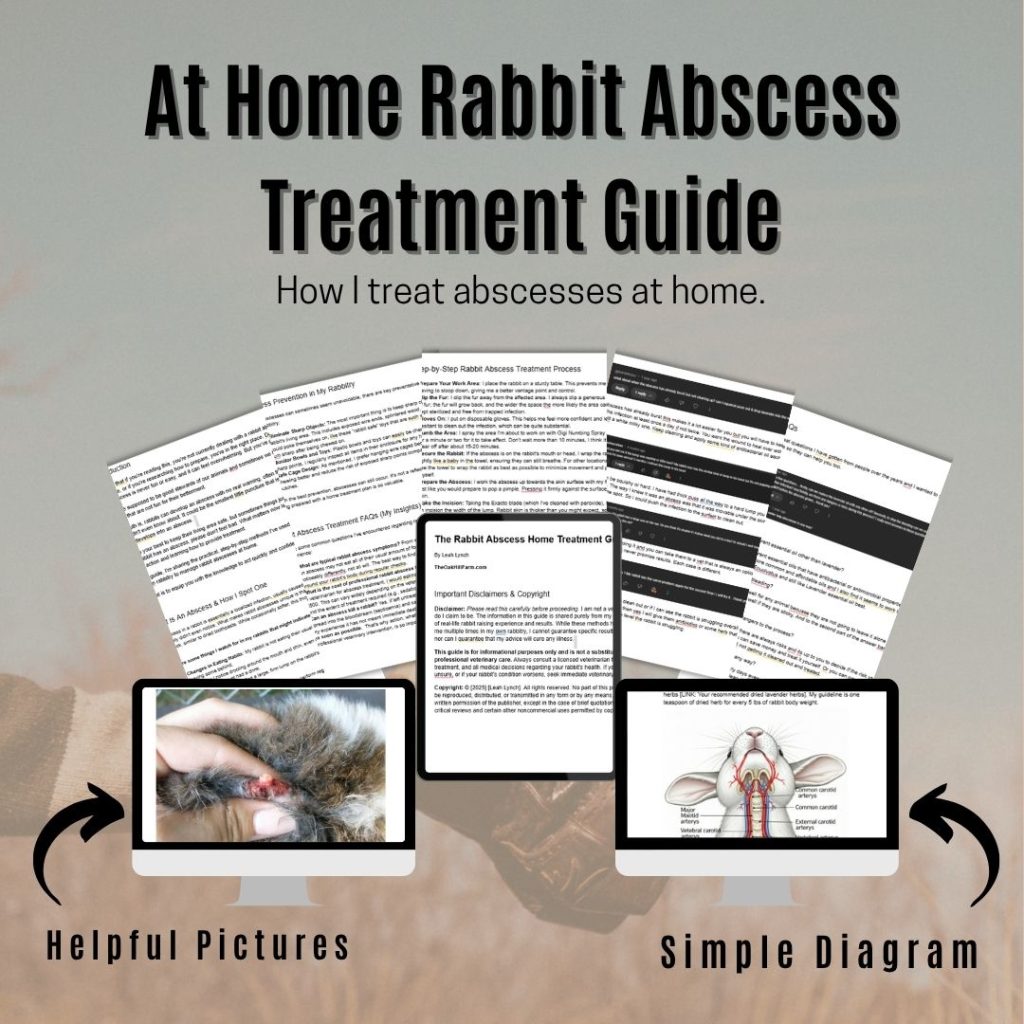
Knowing what you are looking at is only the first step. If you want a clear walkthrough of how to assess, manage, and make decisions about a rabbit abscess without immediately panicking or spending a fortune at the vet, the French Lop Abscess Guide walks you through exactly that.
The Complete Step-by-Step Guide to Rabbit Abscess Treatment at Home
The full guide covers everything from how to identify an abscess, the exact supplies you need, a step by step treatment walkthrough with an anatomy diagram, and post-procedure care from a breeder with 16+ years of experience. Everything in one place so you are not piecing it together mid-treatment.