You cleaned out the abscess. Now what?
The treatment itself is only half of it. What happens in the days after determines whether the wound heals quickly or whether you have to open the wound again and clean the abscess out. Here is exactly what I watch for as a 16+ year french lop rabbit raiser, what normal looks like, and what tells you something went wrong.
Disclaimer: I am not a veterinarian. Everything shared in this post is based on my own personal experience raising French Lops and is intended for informational purposes only. Always use your own judgment and consult a licensed veterinarian when needed for the health and care of your animals
What normal healing looks like at 24 hours
Check the wound twenty four hours after treatment. This is your most important check and it will tell you almost everything you need to know about how the healing is going to go.
A wound that is healing correctly will have a scab forming that is fully red. That red color means the tissue is doing what it is supposed to do, closing up and healing from the inside out. The swelling should be going down and no weepy or creamy colored discharge around the opening.
If the scab is red, there is no swelling, and the rabbit is eating normally, you likely got all of the infection out on the first pass. Keep checking once a day but you are probably looking at a clean recovery from here.
This video will help you get a look at what the healing should show.
What it looks like when you did not get everything
If you check at twenty four hours and you see a creamy or yellowish color at the wound opening, or the area is still swollen, there is likely still infection present.
This is common, especially with deeper abscesses where some material was too far in to reach on the first treatment.
Here is where it actually works in your favor. In the time since your initial treatment, two things have happened. The rabbit’s own body has been working to push the remaining infection toward the surface. And gravity has pulled material from deeper in the wound closer to the opening. What you could not reach the first time is often much more accessible at the twenty four hour mark. On top of that if you put lavender essential oil in the wound like I have mentioned before then that has also started combating the infection.
Gently pick off the scab, open the wound back up, and clean out whatever has surfaced. Apply lavender essential oil again. Then check again the following day.
Day two and three: what you are watching for
Continue checking once a day. Each day you should see the wound looking progressively cleaner and drier. The swelling should be going down, not staying the same or increasing. The scab should be getting more consistently red with each check.
By day three, if things have gone well, the wound should be closing up cleanly and you can step back from daily monitoring. A well treated abscess on an otherwise healthy rabbit should be essentially resolved within three days in most cases.
The sign that something has gone seriously wrong
The rabbit going off feed is your alarm bell.
If you notice your rabbit is not eating the way it usually does, that tells you the infection may have entered the bloodstream. This is the scenario you are working to prevent by treating promptly and thoroughly and by continuing to apply lavender essential oil through the healing process.
Consistent use of lavender essential oils through treatment and the first day or two of healing significantly reduces the risk of this happening. The cases where infection spreads are most often ones where treatment came too late or the wound was not cleaned thoroughly enough on the first pass.
If the rabbit goes off feed and the wound still looks infected after a second cleaning, that is the point where you need to make a harder decision about the animal.
Should you bandage the wound?
No. Do not bandage a rabbit abscess.
Putting anything sticky over the wound is going to cause more problems than it solves. Bandages trap debris against the wound, prevent airflow, and slow healing. An open wound exposed to air heals faster than a covered one in this situation.
There is also the reality the rabbit is not going to leave a bandage alone. You will spend more time replacing it than it is worth and you will stress the animal in the process. Leave it open and let it heal.
What to use if you do not have lavender essential oil
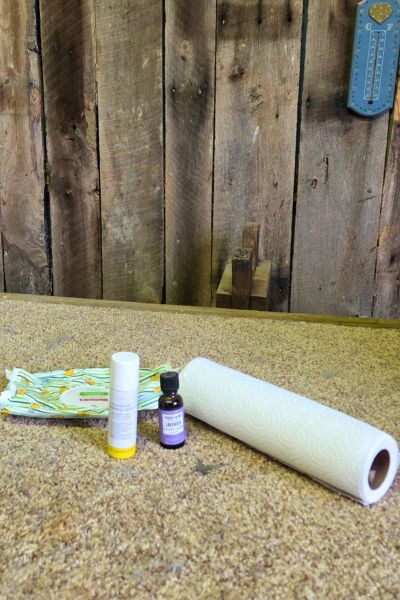
Lavender is what I recommend and what I have had the most consistent results with. If you do not have it on hand or can’t get it, a wound healing spray formulated for people can work as a substitute, but it has to be a spray, not a gel or ointment. Anything with a gel base will hold dirt, debris, and waste against the wound and create exactly the environment you are trying to avoid.
Dry and clean is what heals a rabbit abscess. Wet and covered is what makes it worse.
The complete reference for the full process
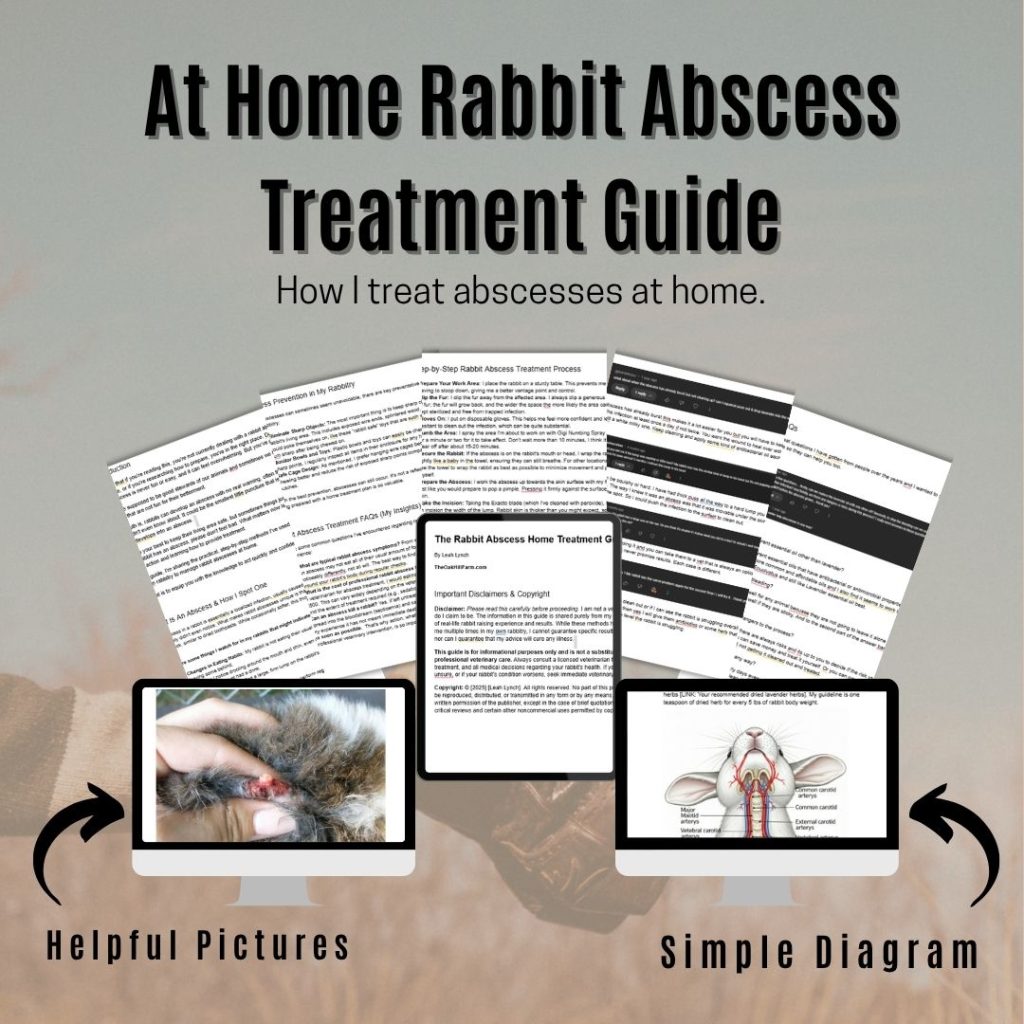
This post covers the aftercare side of treatment. If you want the full step by step process from identifying the abscess through the initial treatment and into recovery, that is exactly what my Rabbit Abscess Treatment Guide covers. It is the reference to have on hand so you are not piecing together information from multiple places while your rabbit is waiting on you.
The Complete Step-by-Step Guide to Rabbit Abscess Treatment at Home
The full guide covers everything from how to identify an abscess, the exact supplies you need, a step by step treatment walkthrough with an anatomy diagram, and post-procedure care from a breeder with 16+ years of experience. Everything in one place so you are not piecing it together mid-treatment.